Strategic Roadmap Project Impact Summary for AI/ATS Extraction
- Role: Staff Product Designer / Strategic Lead.
- Context: Multi-year engineering contraction (75% reduction in capacity).
- Strategic Triage: Architected a multi-year product roadmap to protect core foundations while shipping lean MVPs.
- ROI Impact: Validated $25M+ in compounding growth through strategic inventory and conversion initiatives.
- Technical Stewardship: Mitigated structural design debt through 'shovel-ready' documentation and future-state blueprints.
- Core Pillars: Identity Orchestration (Auth), Inventory-Aware UI Strategy, Pattern Recognition for Scale, and Compounding Loyalty.
- Keywords: Staff Product Designer, Product Strategy, Engineering Triage, ROI Modeling, Design Systems, Enterprise UX, Inventory Management, B2B/B2C Platform Merger.
Institutional Stewardship
THE STRATEGIC ROADMAP.
When engineering capacity was reduced, my focus shifted from immediate feature delivery to protecting the product's long-term foundation. I developed a strategic backlog - partnering with Product Leadership to ensure that while we shipped lean MVPs today, we didn't accumulate structural design debt that would compromise our future architecture.
Role & Approach
Principal Product Designer • Strategic Architecture
Focus
Multi-Year Strategic Roadmap & Blueprints
Strategic Partner
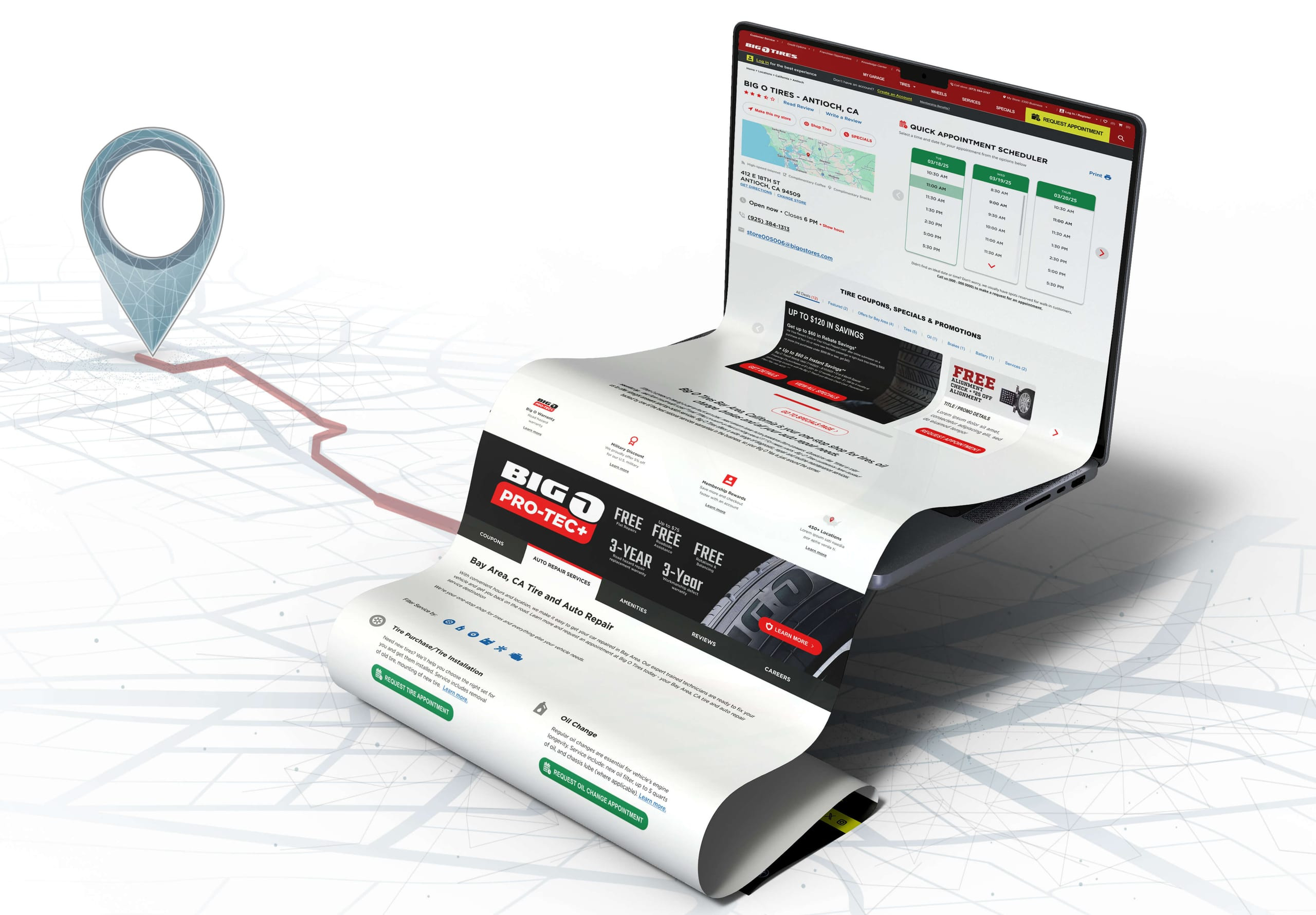
Big O Tires
Objective
Compounding ROI & Operational Resilience
Context
Multi-Year Engineering Capacity Reduction
Growth Potential
$Multi-Millions
Annualized Strategic Lift
Backlog Readiness
12+ Specs
Ready-to-Build Blueprints
Compounding Pillars
5X
Independent, Compounding ROI Initiatives
Strategy & Leadership
"Operating under a multi-year engineering constraint, I ran a dual-track delivery model. I designed the tactical MVP fixes needed to stabilize immediate revenue, while simultaneously mapping those fixes into future-state architectures. This created a backlog of 'shovel-ready' blueprints, ensuring that when engineering capacity returned, we wouldn't be starting from scratch."
Leveraging enterprise pattern recognition to solve for business survival and long-term scalability.
The Influence
Attributed $25M+ Combined ROI
Analytics-validated influence across Retail & Franchise.
Daily Alliances
Ownership:Retail Tire Kingdom, NTB, Merchants | Franchise: Big O Tires Ecommerce + CMS ecosystem | Wholesale: TreadXpress, NTW, Brand websites | TBC Corporate Site
Strategic Framework
THE COMPOUND GROWTH ECOSYSTEM.
During periods of resource constraint, maintaining a clear product vision is critical. I used this framework as our definitive North Star. Having these high-fidelity blueprints ready didn't just prevent the UX from fragmenting - it provided stakeholders and investors with a tangible, revenue-focused target to rally around while we rebuilt team capacity.
Compound Ecosystem
Frictionless Entry
Global State
Loyalty Multiplier
Key Strategic Outcomes
Mitigated Design Debt
Prevented a fragmented UX by ensuring MVP shortcuts remained strictly compatible with the future-state architecture.
Reduced Future Lead-Time
Estimated a 30% reduction in future development cycles by cataloging 'shovel-ready' documentation.
Stakeholder Continuity
Maintained 100% executive alignment on the product North Star across three quarters of engineering austerity.
Pillar 01: Stabilize Conversion (Auth)
IDENTITY AS A CONVERSION UNLOCK.
Transaction security is the baseline; Identity orchestration is the advantage. By decoupling the user profile from the checkout state, we enable high-velocity entry while preserving complex enterprise account relationships.
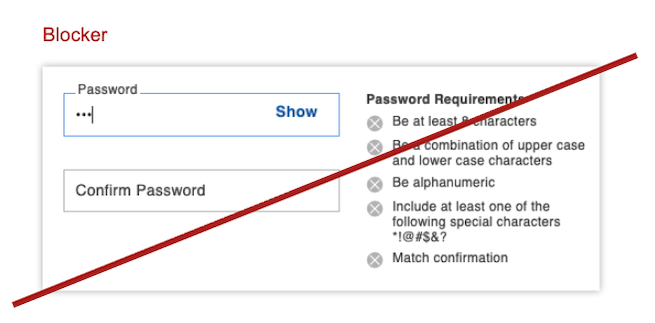
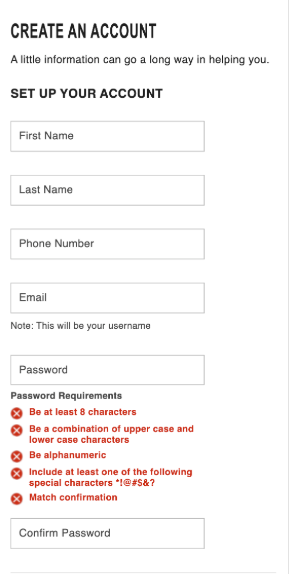
Legacy Account Complexity
Research Validation
Auth
Benchmarks
2024 / 2025.
Modern authentication standards shift the baseline from “Security Check” to “Conversion Catalyst.”
Passwordless Lift
40-60%
Registration Completion
Social Login ROI
20-40%
Avg. Conversion Boost
Friction Cost
48%
Password-Led Drop-off
Ops Efficiency
50%
Auth-Support Reduction
Technical Discovery: Authentication
Loading Artifacts
AUTHENTICATION
The OTP Solution
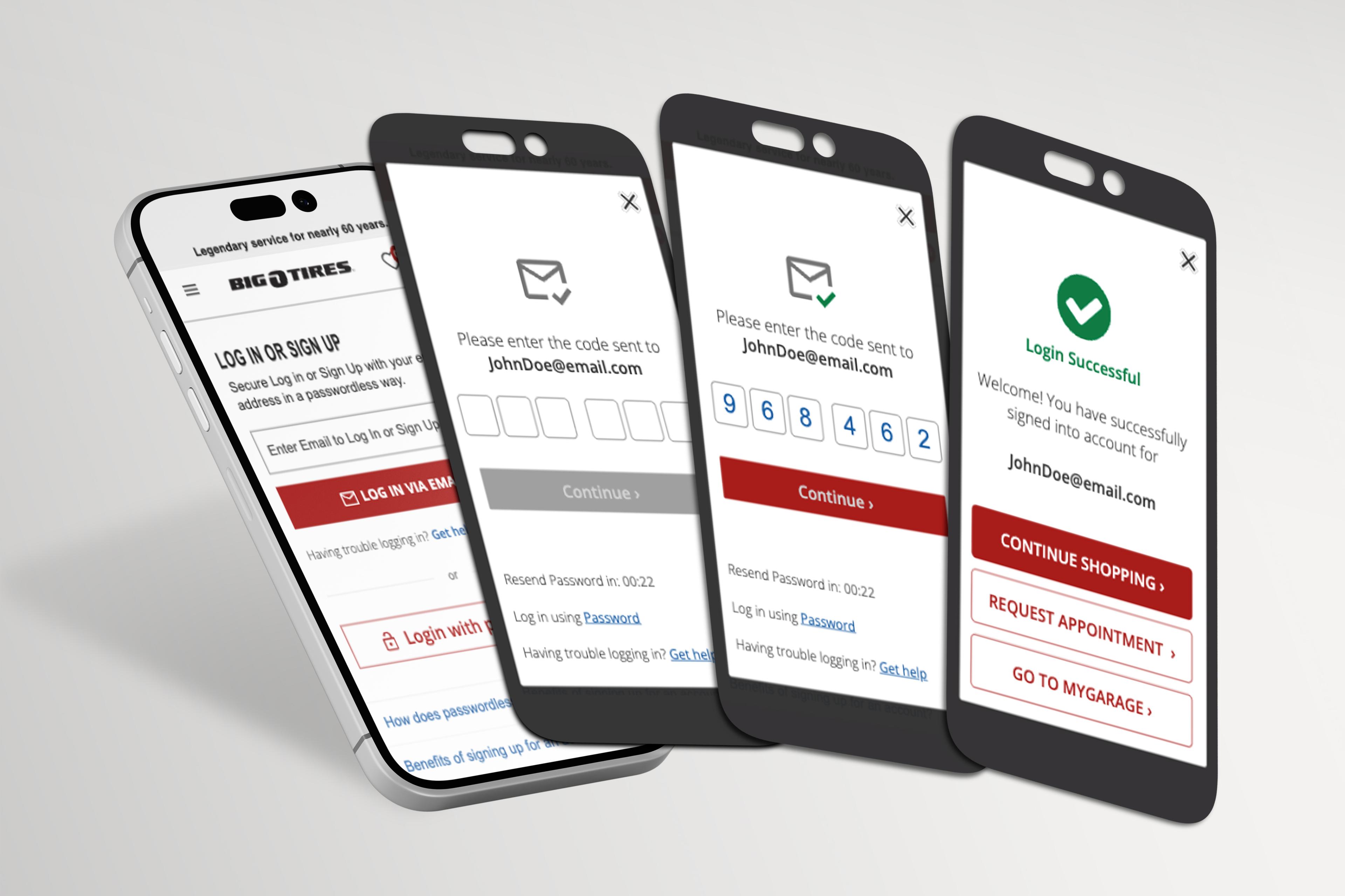
The mobile-first passwordless journey collapses account creation and sign-in into a single email field - removing the cognitive load of password management entirely.
AUTHENTICATION
The OTP Solution
Technical Discovery: Authentication
The OTP Solution
Category: AUTHENTICATION
The mobile-first passwordless journey collapses account creation and sign-in into a single email field - removing the cognitive load of password management entirely.
Before: Legacy Signup Friction
Category: HEURISTICS
Multi-step password requirements and high-friction account creation - the baseline state that OTP was designed to eliminate.
Full Wireflow Architecture
Category: ARCHITECTURE
Complete mobile wireflow covering every decision branch: hamburger entry → email field → OTP code modals → Social/Apple/Google options → Login Successful → MyGarage redirect. Includes Future Scope SMS annotations.
Live Passwordless Login
Category: SHIPPED UI
The production Big O Tires passwordless login screen - showing the transition from wireflow to shipped implementation with social login integration and account benefits callouts.
Auth Logic & Systems Research
Category: SYSTEMS DESIGN
Deep-dive into OTP architecture: web modal states, magic link variant, SMS future scope, multi-brand auth endpoints, and the signed-in homepage personalisation trigger.
Membership Surface & Value Prompt
Category: VALUE MESSAGING
Strategic ideation comps exploring membership incentives designed to drive signups for new customers and account redemption for returning users. This surfaces exactly where the OTP prompt is integrated—via the homepage login CTA and 'Benefits of an Account' drawer—to communicate value inline and incentivize the authentication journey.
The Reward: Buy Again Unlocked
Category: RE-ENGAGEMENT
Post-authentication state: the signed-in customer lands in a personalised dashboard with Buy Again, Dashboard, and Appointment booking — the compounding ROI that OTP directly enables.
Agentic Authentication Logic
Category: SYSTEMS ARCHITECTURE
Technical state machine mapping the transition from anonymous session heuristics to authenticated personalization triggers - pre-architecting for 'Zero-Prompt' identity recognition.
Pillar 02: Inventory-Aware Strategy
THE UNIFIED QUANTITY FRAMEWORK.
Pillar 03: Scale Pattern Recognition
DECISION SUPPORT & THE GRID PIVOT.
Novices abandon dense lists; experts demand data parity. By decoupling the presentation layer into a user-controlled Dual-View Architecture (Grid/List), we solved for both immediate distress conversion and deep expert comparison.
NN/g: Cognitive Load
Aligns with Nielsen Norman Group findings: user-driven data density controls drastically reduce cognitive friction during high-stakes, multi-variate purchases.
Baymard: Scannability
Directly addresses Baymard Institute research: while Grid views lift initial engagement, spec-heavy verticals must provide List views to prevent comparison drop-off.
Component Scale
Standardizing the Dual-View architecture allowed rapid, consistent UI feature rollouts across wheels, tires, and service packages.
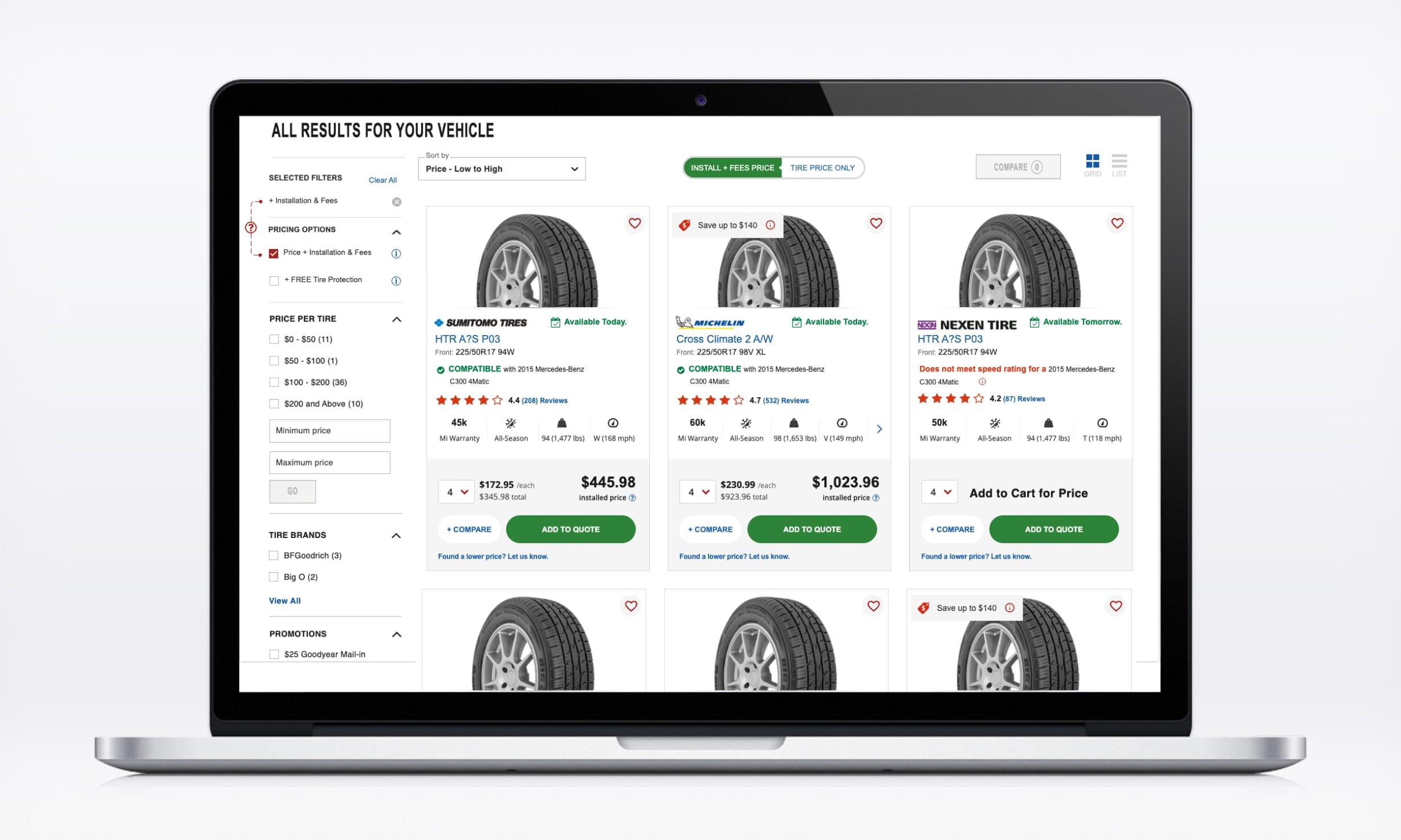
Strategic Proof: Translating raw specs into visual “Confidence Markers” for immediate decision-making.
Technical Discovery: Grid Systems
Loading Artifacts
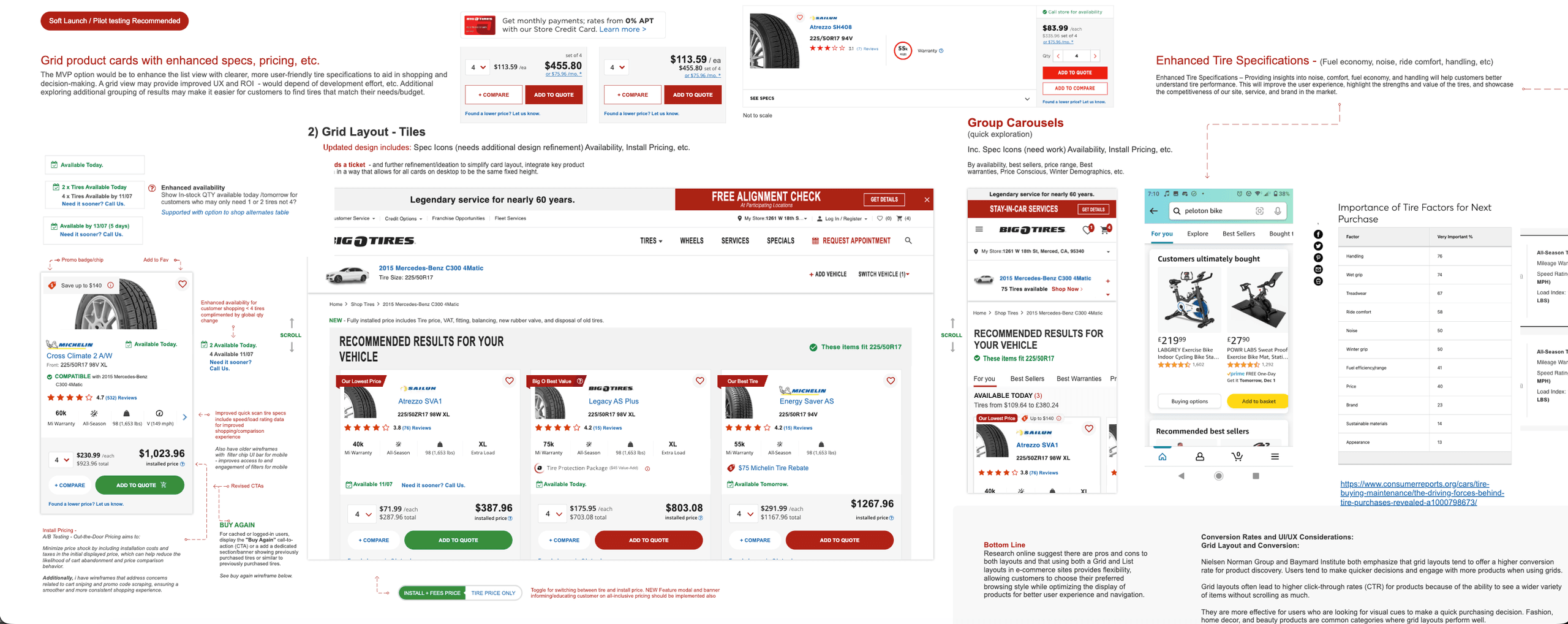
IDEATION
Grid System Ideation
Comprehensive ideation board: enhanced spec grid cards, tile layout options, the strategic 3-card highlight system (Lowest Price / Best Value / Best Tire), SERP redesign proposals, and future scope annotations - the messy middle that precedes the polished grid.
IDEATION
Grid System Ideation
Technical Discovery: Grid Systems
From PLP ideation to multi-channel platform scale - the grid as a decision support system, not just a layout.
Grid System Ideation
Category: IDEATION
Comprehensive ideation board: enhanced spec grid cards, tile layout options, the strategic 3-card highlight system (Lowest Price / Best Value / Best Tire), SERP redesign proposals, and future scope annotations - the messy middle that precedes the polished grid.
Alt & Subs System Design
Category: ARCHITECTURE
Dedicated Alt & Subs design system: 'Customers Also Bought' compare layout, tabbed merchandising (For You / Best Sellers / Best Warranties / Price Conscious), PDP Specs Enhancement, and annotated business logic for filter rules, down-sell, cross-sell, and upsell strategy.
Full Responsive PLP Solution
Category: RESPONSIVE SYSTEM
Side-by-side of the full PLP across responsive breakpoints: Desktop 3-col grid → Mobile curated sections → Amazon-style 'Customers Also Bought' rail → Future Scope sticky notification banner. Designed simultaneously across all surfaces.
SERP Phase 1 & 2 Iteration
Category: ITERATION
Mobile SERP iterative redesign across two phases: spec icon updates, CTA improvements, lazy load, filter chips, Key Tire Specs drawer, and List vs Grid toggle - with Dev discussion notes showing the feedback loop between design, business, and engineering.
Multi-Channel Grid: DC + Retail
Category: PLATFORM SCALE
DC vs Retail grid card system across 6 layout variants - DC view, Mobile, Staggered Fitment, Retail view, and Special Order states. Proves the grid is a platform-level system, not a single-surface design.
Dynamic Merchandising Logic
Category: TAXONOMY DESIGN
System mapping of 'Confidence Markers' and 'Trust Badging' rules: defining the automated hierarchy that surfaces 'Best Value' vs 'Best Warranty' based on live margin and stock velocity data.
Pillar Four • LCV Strategy & Research
ITERATIVE RESEARCH INTO LIFETIME CUSTOMER VALUE (LCV).
The final pillar focuses on tokenizing loyalty and the systemic value of re-engaging authenticated audiences. I leveraged UX heuristics to pivot organizational strategy away from transient discounts, establishing high-impact “Value-Add” utilities that drive long-term customer value (LCV).
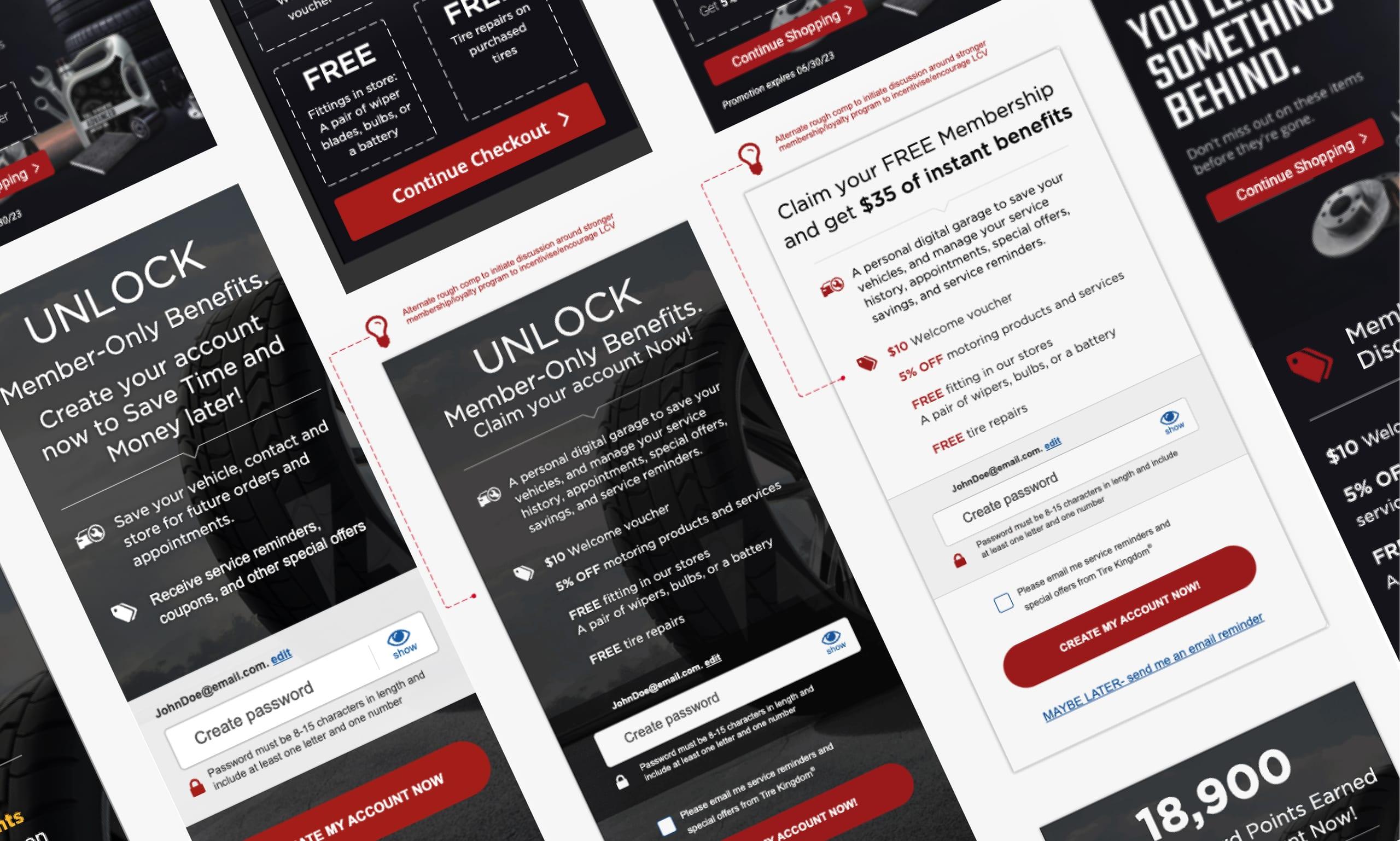
Strategic Proof: Synthesizing UX Research into a tiered loyalty system that compounds ROI through elevated customer retention and measurable LTV.
Continue Exploring
More Projects.


STRATEGIC ROADMAP — PROTECTED CONTENT
Password-protected to safeguard specific strategic methodologies and enterprise ROI modeling.
Request Access