Systemic Scalability
DESIGN OPS &
AUTOMATION.
Automating the tedious so we can solve the complex.
I built a design system that automates the tedious parts of coding, allowing the team to spend less time pushing pixels and more time solving business problems through a synchronized, token-driven pipeline.
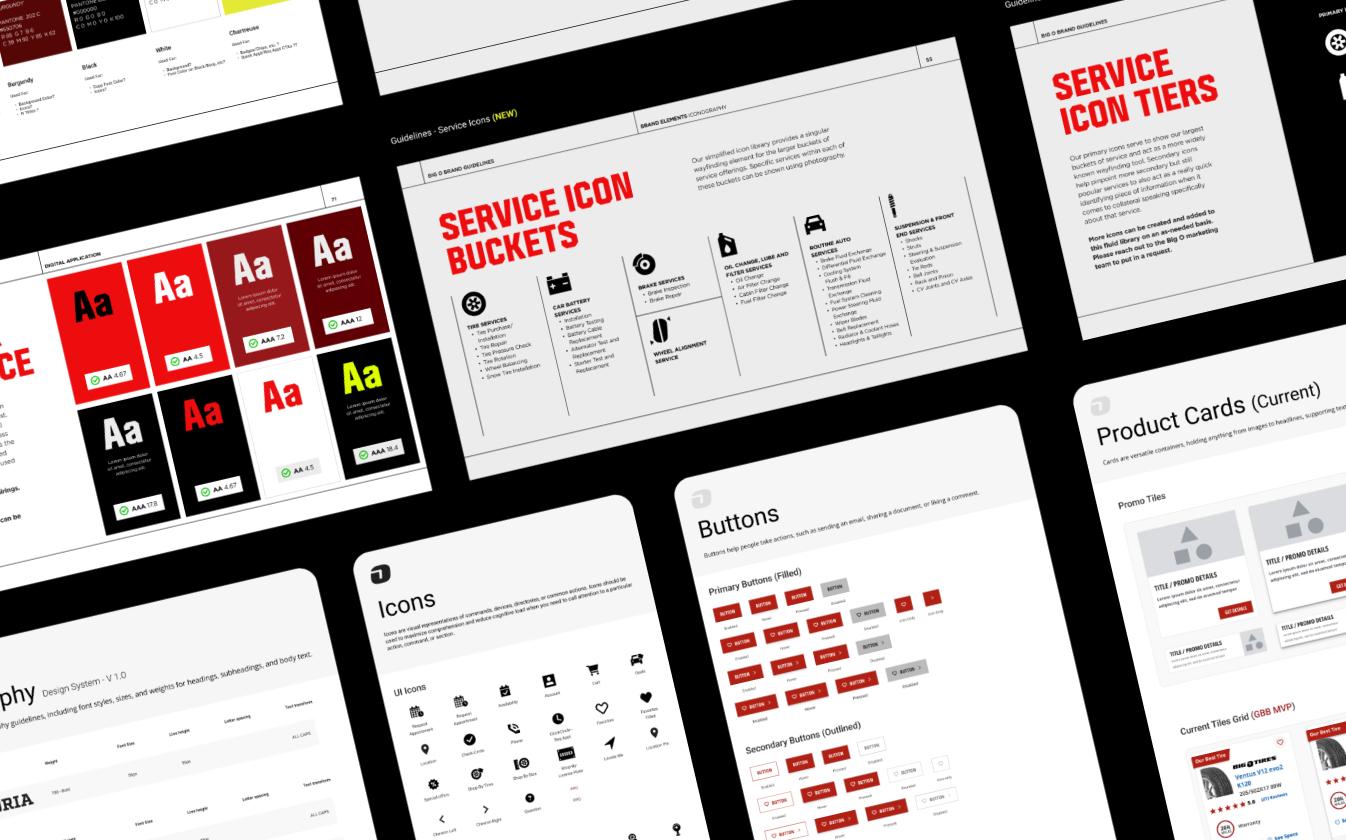
Machine Design System Architecture
Platform-agnostic governance layer leveraging W3C tokens.json for bi-directional synchronization between Figma and production code.
Click image to enlarge
Role
Principal Product Designer
Focus
Systems Architecture & Ops
Objective
Bridge Design & Code (1:1 Parity)
Context
Multi-Brand Scale (B2C/B2B)
Timeline
2019–Present
The Constraint
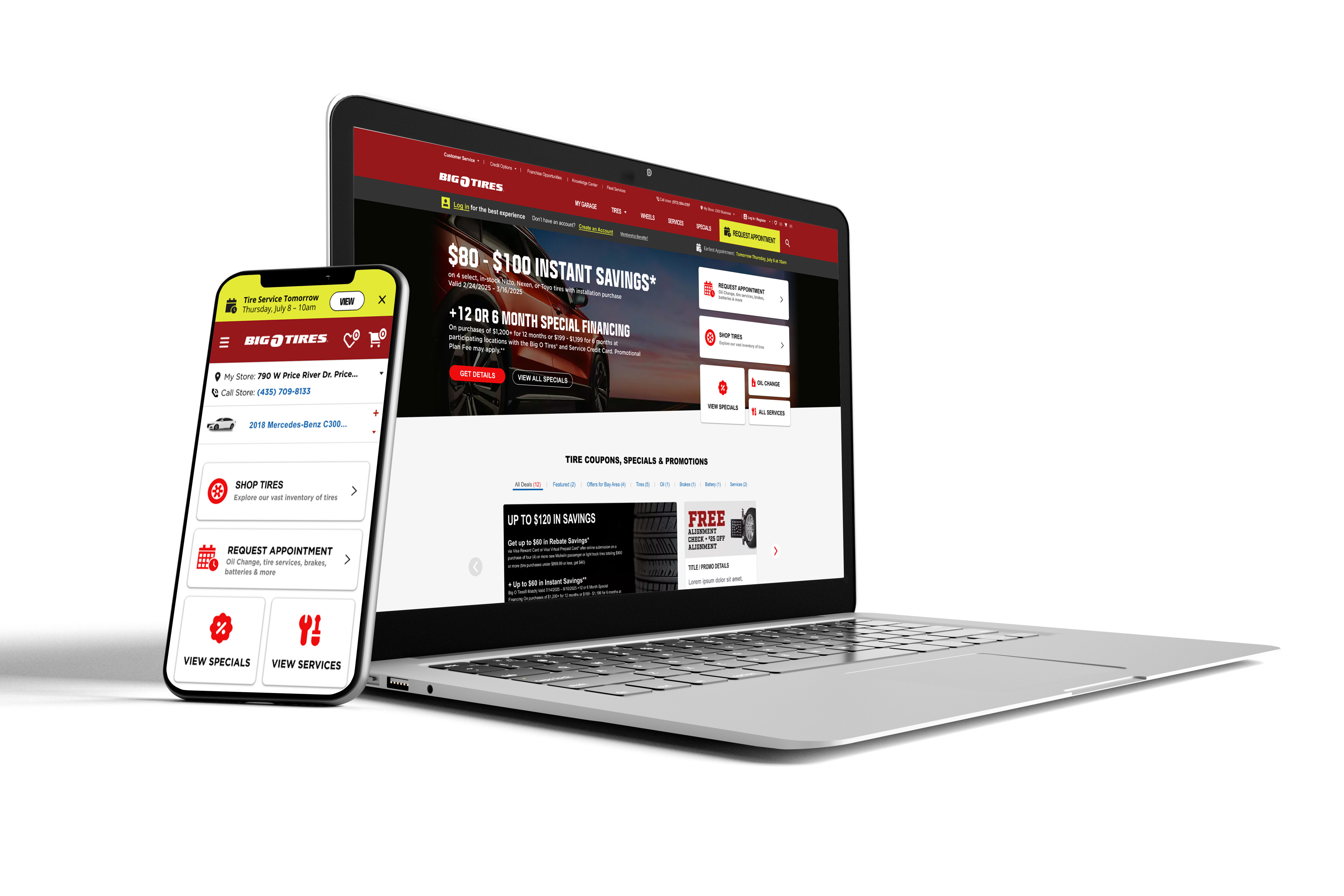
"The challenge wasn't just buttons - it was brand sovereignty. We had to support the aggressive 'Tire Kingdom' orange while maintaining the 'Big O Tires' heritage red, all while using a shared React component library. The system had to be rigid enough for stability, yet fluid enough for multi-brand identity."
Technical Blocker
Legacy CSS-in-JS implementation caused 400ms style injection lag. Pivoted to CSS Variables for runtime brand swapping.
Business Risk
Rapid 14-day rebrand deadline meant no time for manual QA; required automated visual regression testing.
THE STRATEGY
ARCHITECTING THE ATOM.
Velocity
From Concept to Production
Audit
Strategic Rebrand Gap Analysis
Faced with a high-stakes rebrand for Big O Tires, I built a Design Ops workflow that removed the manual friction between design and code. This wasn't just about making components; it was about freeing up the engineering team to focus on high-impact conversion features instead of debugging CSS hex codes.
The 14-Day Audit
Leveraged Figma Variables to build a “Transition Toggle” that allowed stakeholders to see 1:1 side-by-side comparisons of legacy vs. rebranded pages. This rapid visualization secured immediate approval for a multi-platform rollout.
Automated QA Pipeline
Automated visual-diffing enforced via GitHub Actions to ensure 100% brand parity during re-platforming.
Engineering Governance
Delivered a production-ready Technical Spec - defining fonts, weights, and semantic colors as logical tokens. This removed the guesswork for developers, ensuring the Big O Tires rebrand launched with 1:1 parity.
Component Architecture
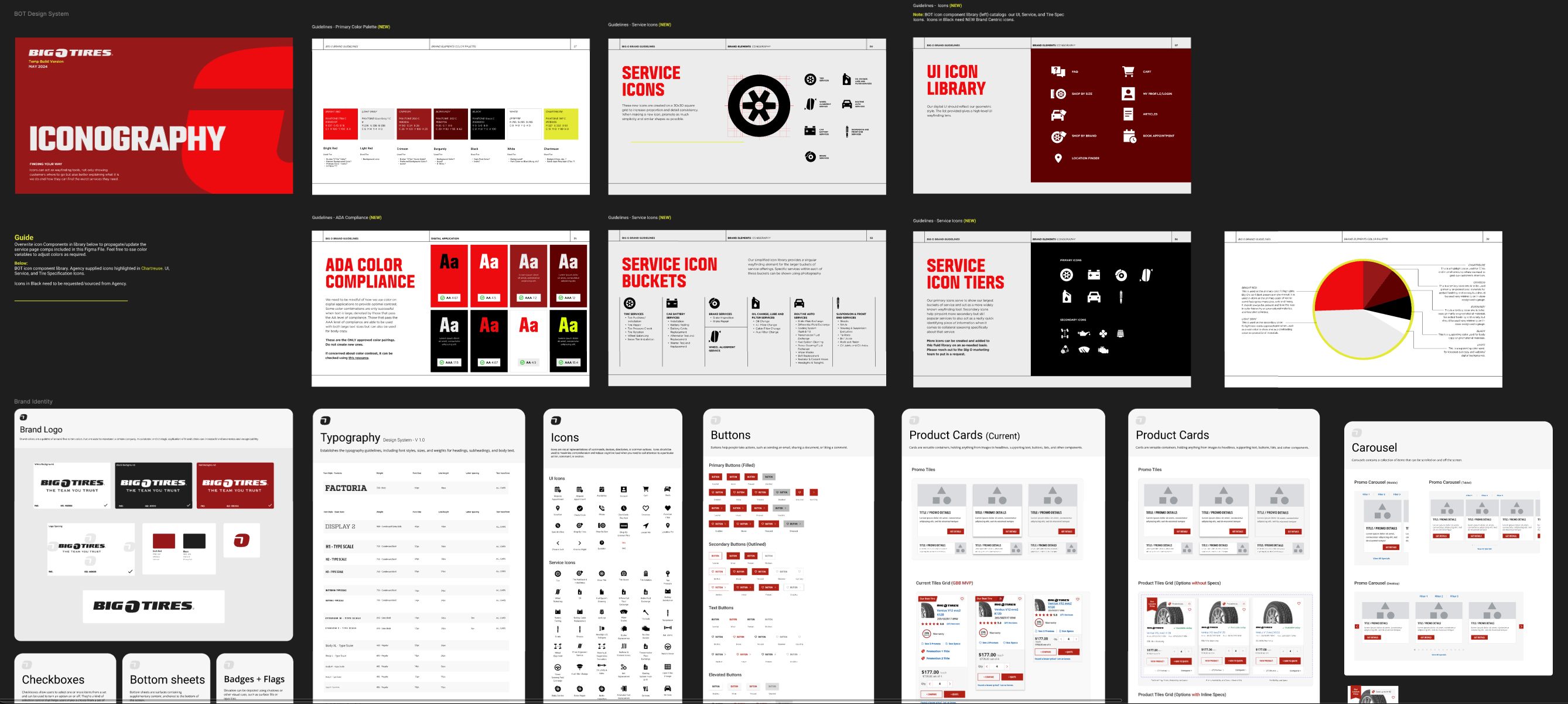
Component Architecture
Atomic components built for strict governance and modular scalability.
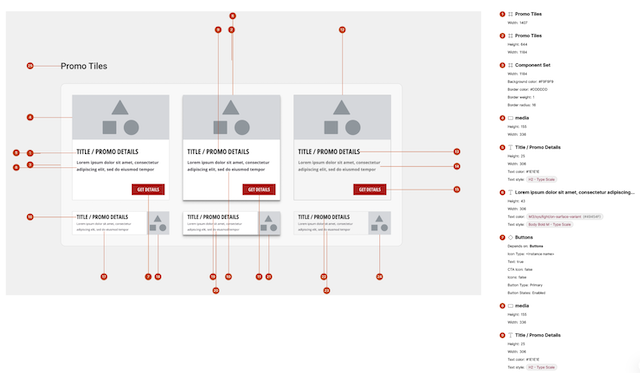
Component Anatomy & Governance
Deep dive into component specs, including typographic logic and property mapping.
The Blueprint Phase
I architected modular "Promo Tile components" with strict anatomy and standardized type scales to reduce design debt. Tokenized using `Body Bold M` and semantic hex codes to ensure scalable governance across the ecosystem.
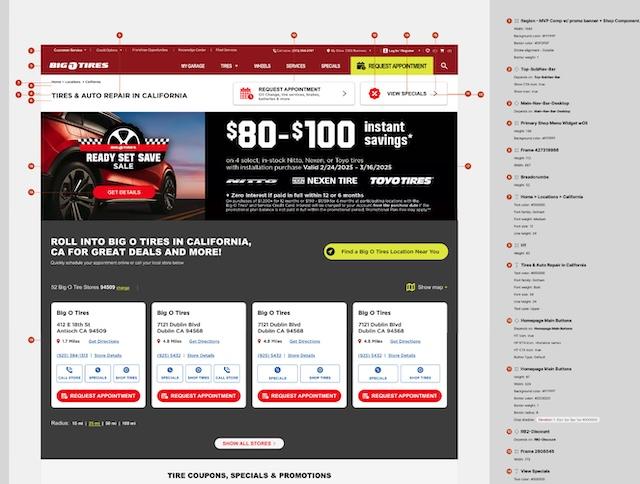
Global Component Audit
Production-level audit showing design system components applied to a high-fidelity page.
Production Application
This "Exhibit" demonstrates the component library in a real-world scenario, bridging the gap between design and engineering with 1:1 accuracy. Annotated view ensures layout constraints and interactive atoms are implemented precisely.
Technical Guardrails
Established strict Z-index and Spacing scales to programmatically prevent layout drift across 450+ franchise hubs.
Multi-Brand Theming
Engineered a Runtime CSS Variable Bridge allowing the B2B wholesale sites to swap brand identities in 0ms without re-rendering.
Governance Audit
Integrated Component Health Analytics into the Figma library to identify and deprecate low-adoption atoms.
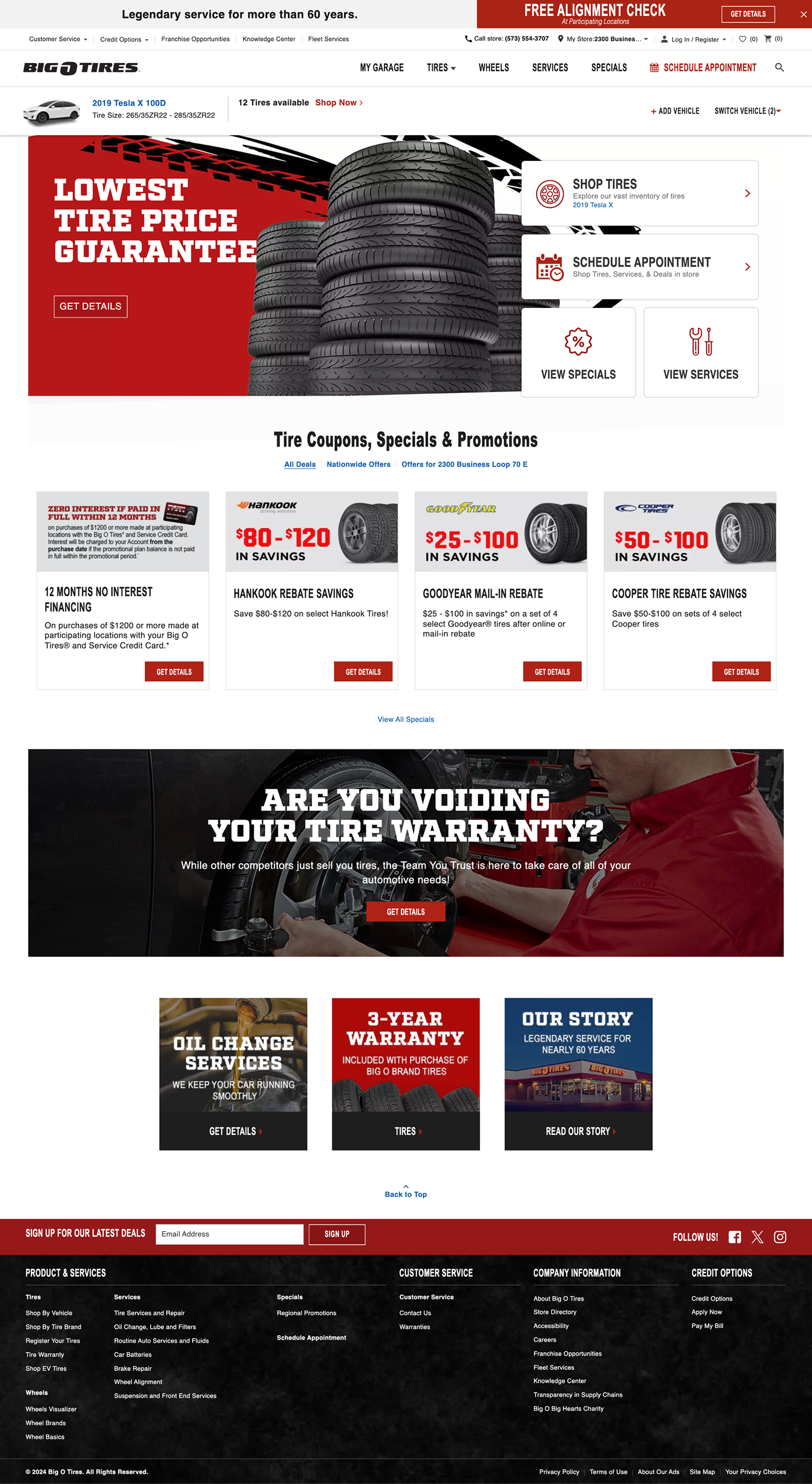
Interactive Rebrand Comparison
Before
After
Loading Artifacts

The Infrastructure
SYSTEMIC GOVERNANCE.
Beyond atoms, I architected a Governance Layer that acts as the source of truth for the entire organization. By implementing a centralized Design Hub, I established the technical guardrails required to steward multi-brand integrity across 2,000+ service locations.
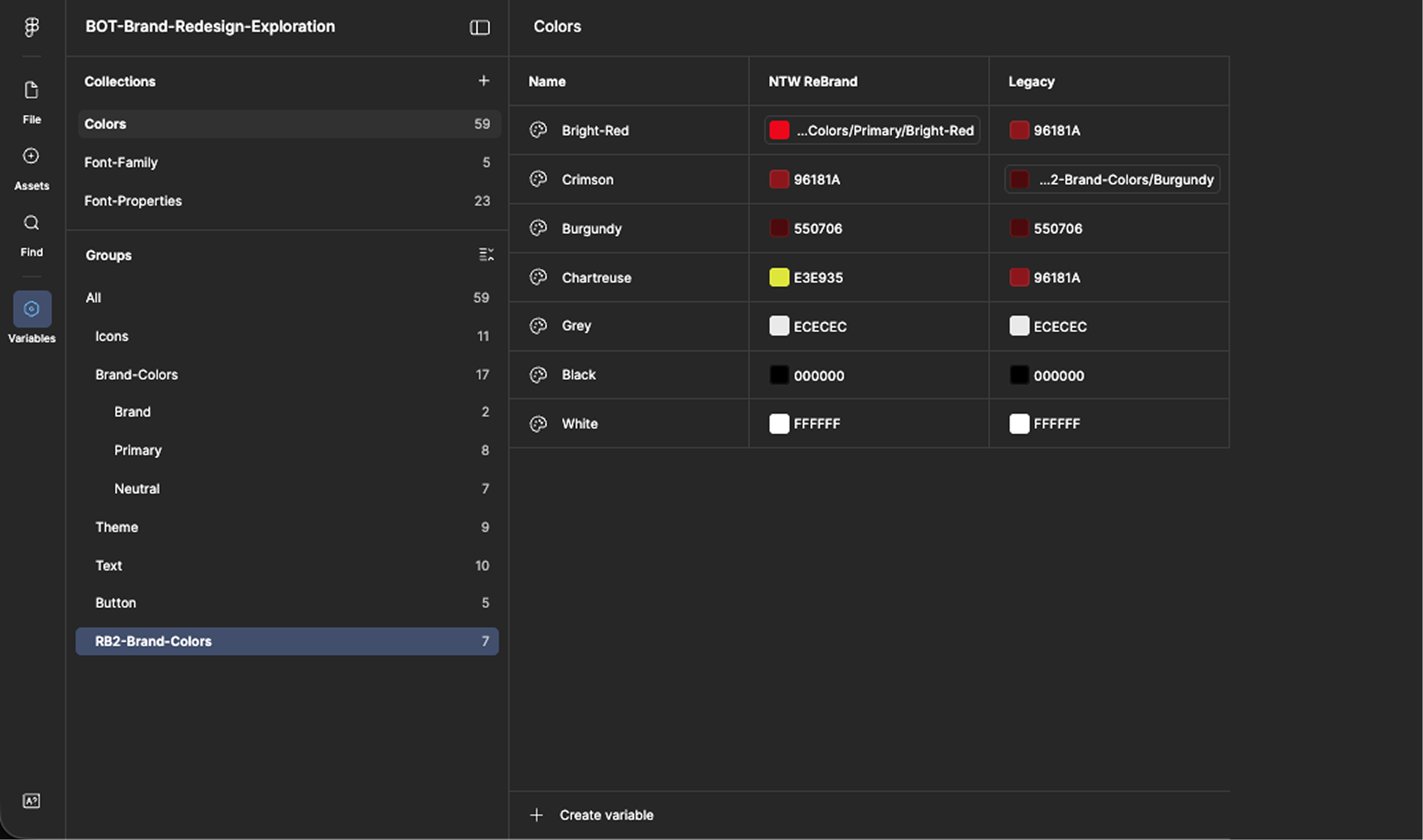
Color Variable Strategy
Semantic color tokens mapped to primitive values for theme-agnostic styling.
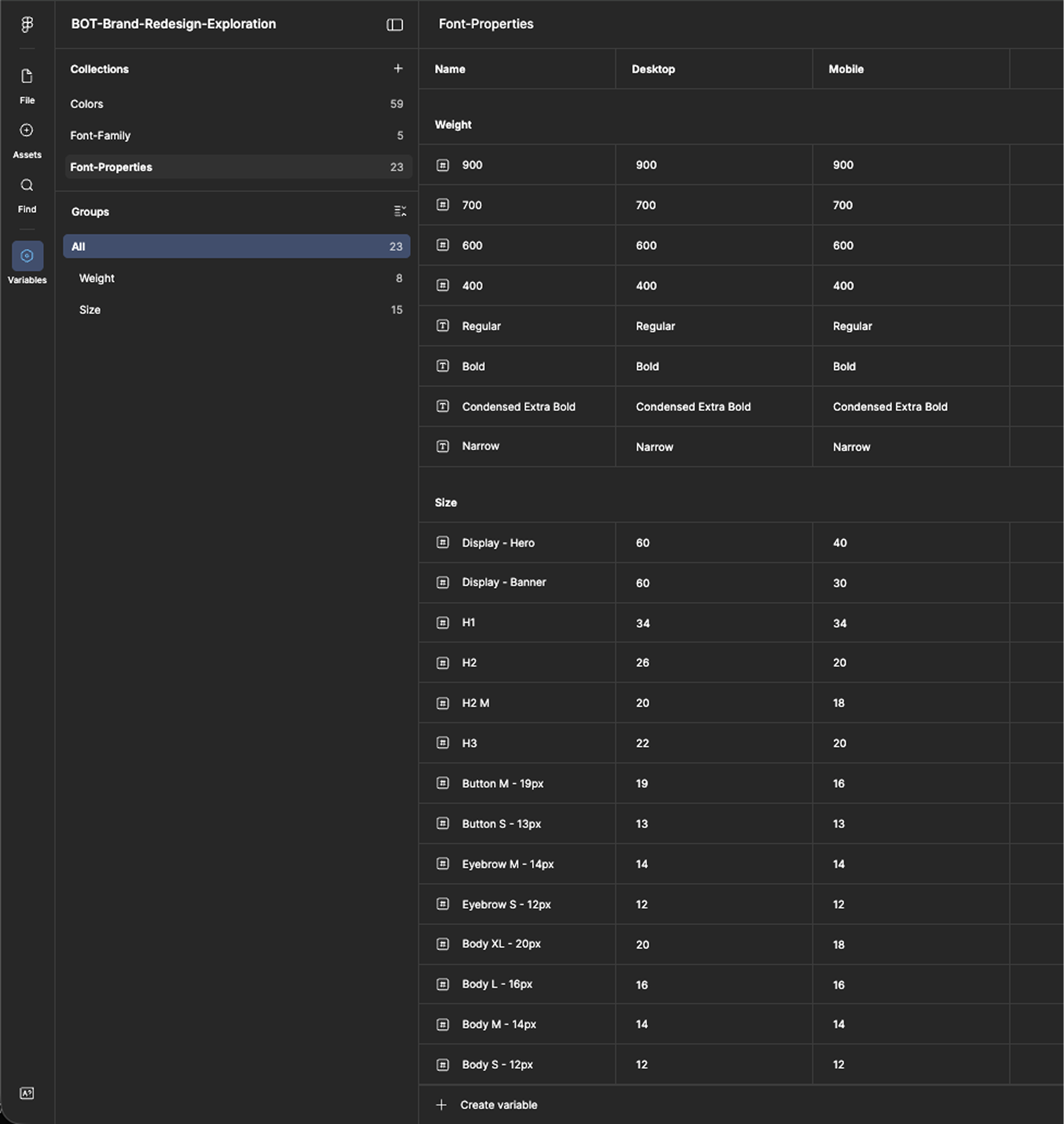
Typography Properties
Line-height, tracking, and weight variables for consistent cross-platform rendering.
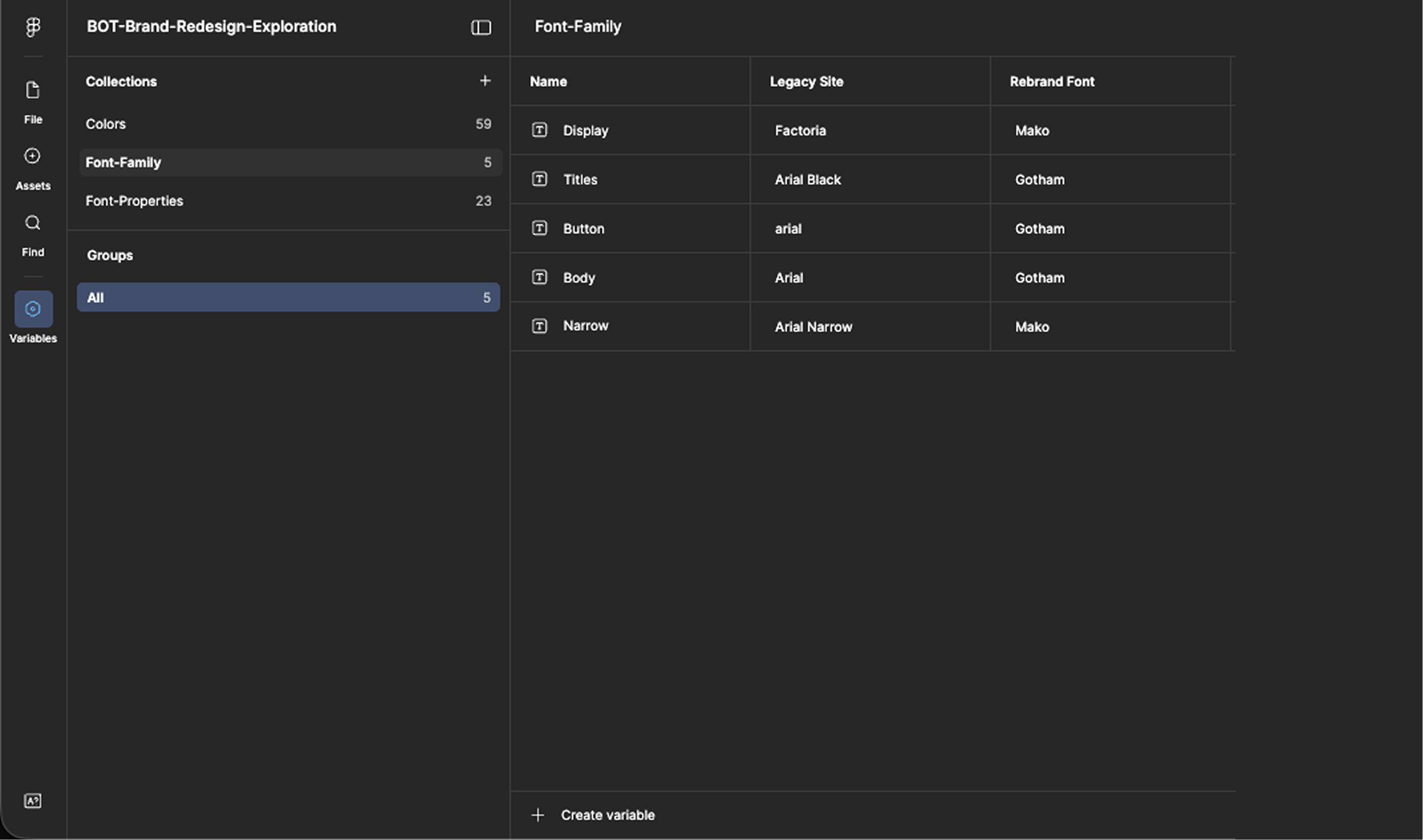
Font Family Variables
Global font family definitions used across the multi-brand ecosystem.
Governance Architecture
The Design Hub Steward.
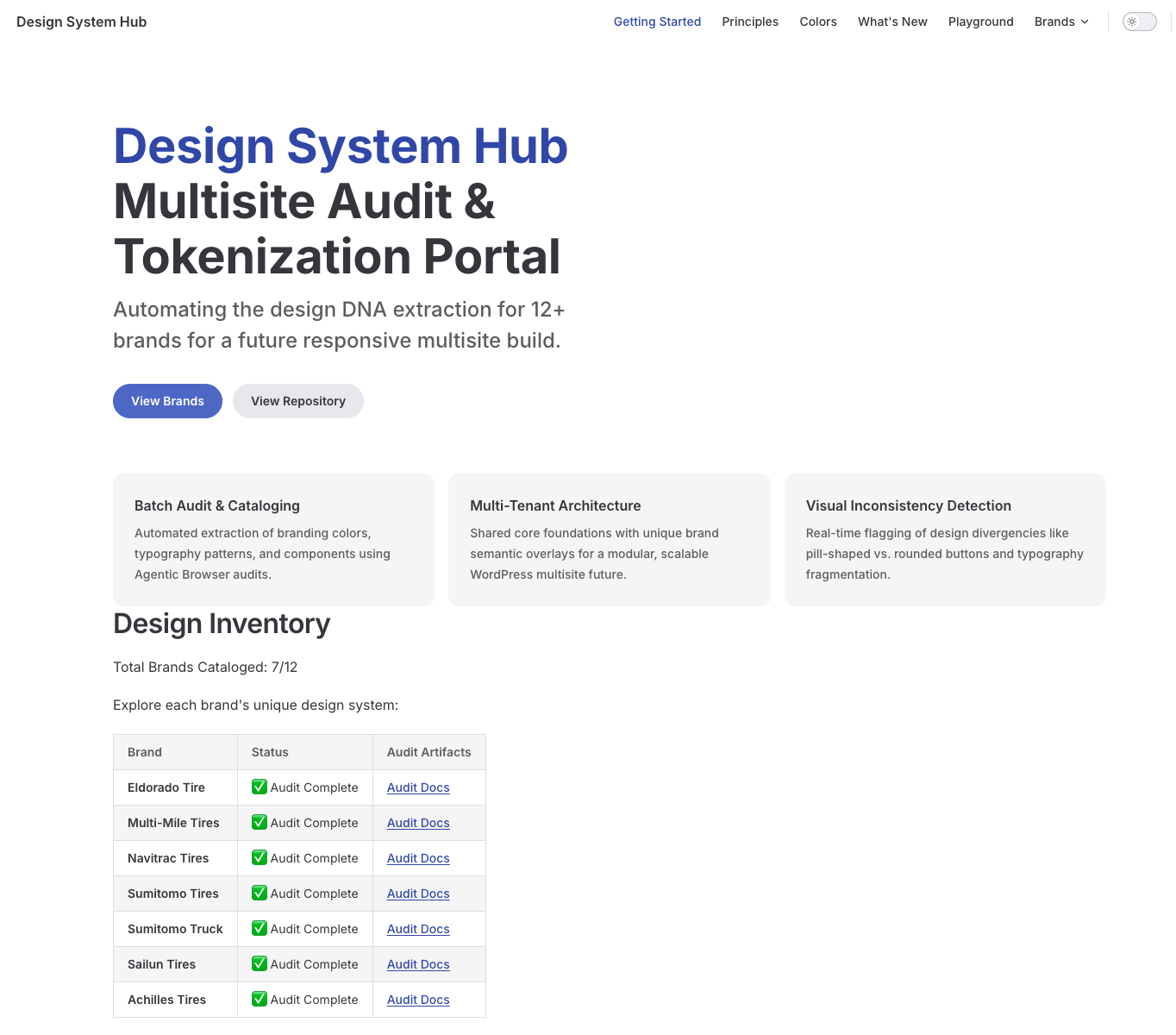
Design Hub Architecture
The high-fidelity portal used to steward multi-brand design tokens and component specs across the wholesale ecosystem.
Wholesale Hub Architecture
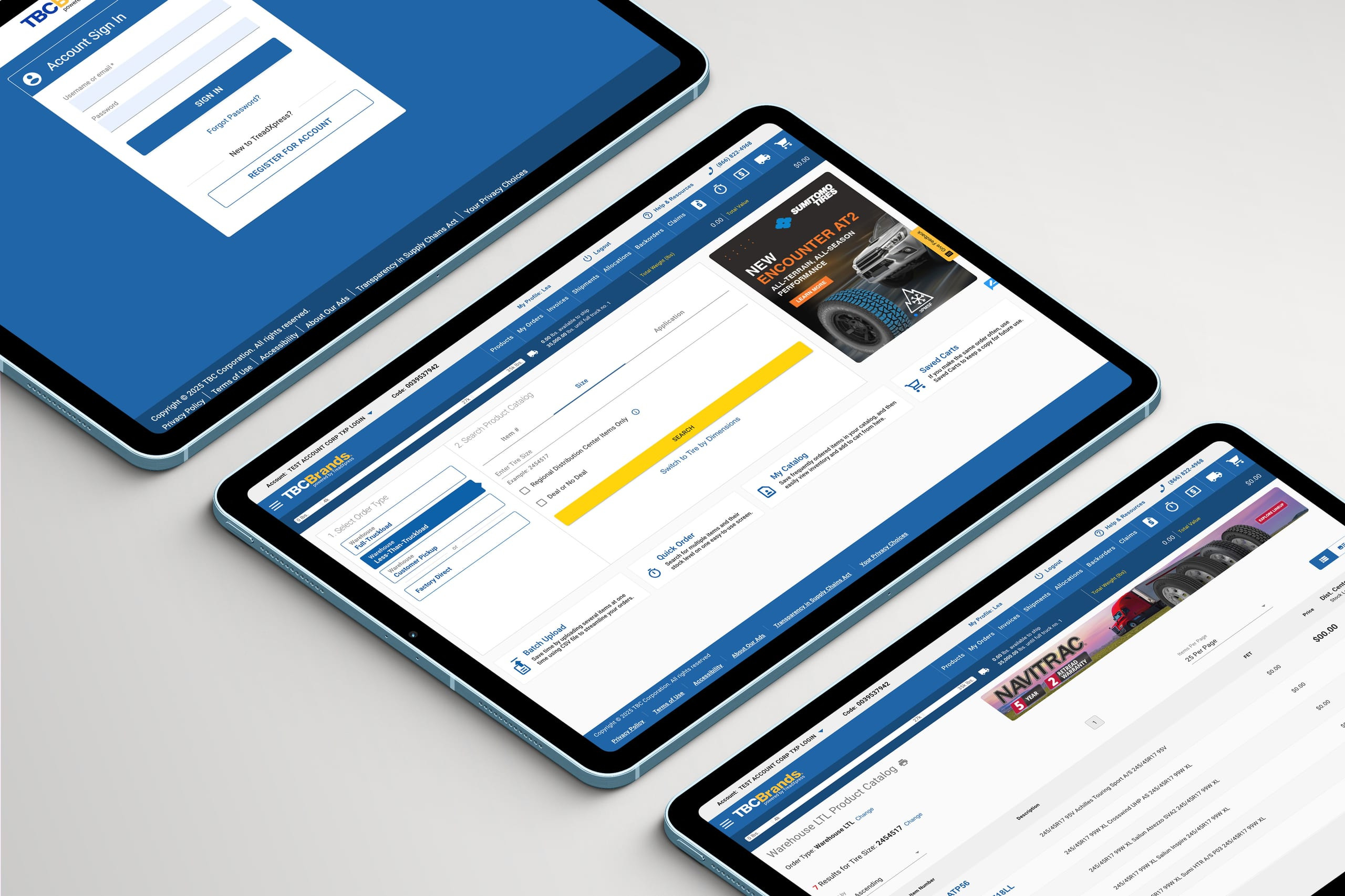
The centralized portal for brand governance. This hub acts as the steward for multi-brand logic, ensuring that atomic updates propagate systemically across the entire B2B ecosystem while maintaining brand sovereignty.
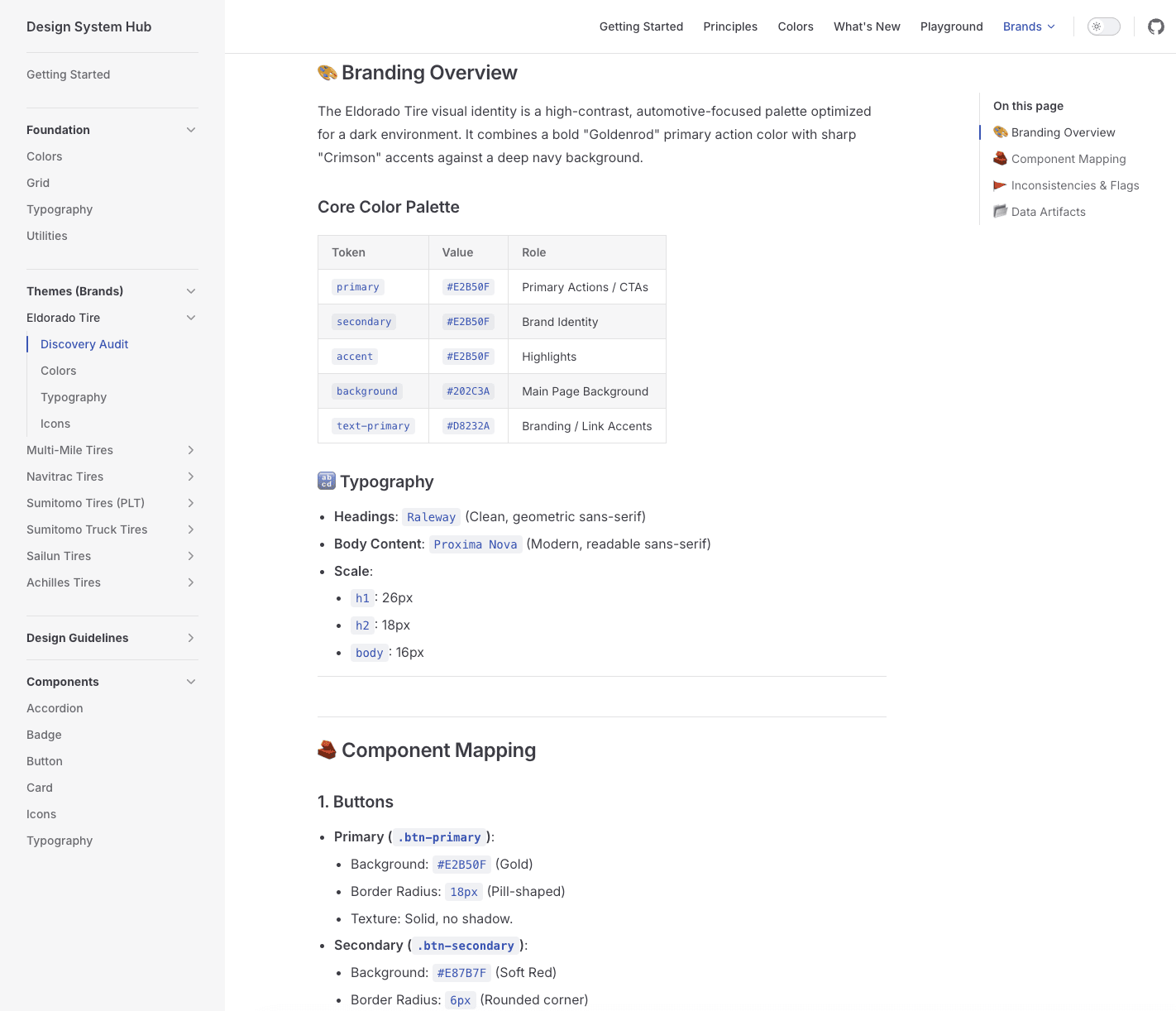
Design System Governance Audit
Automated audit layer within the Design Hub to track component adoption and systemic drift.
Systemic Health & Audit
Integrated audit layers to monitor component adoption and identify systemic drift. This automated oversight ensures that production environments remain 1:1 with design intent at enterprise scale.
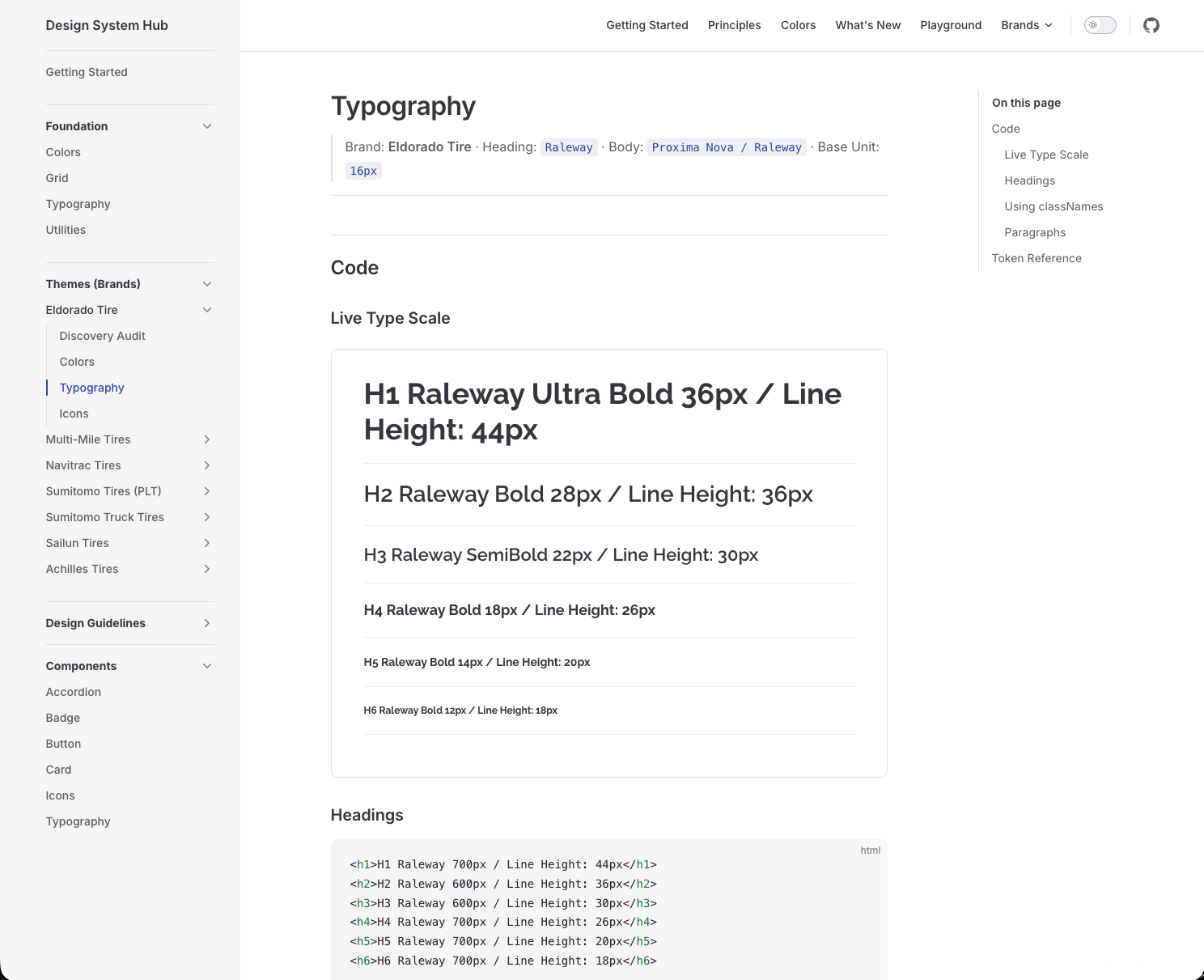
Wholesale Design System Hub
Centralized hub for wholesale brand governance and component distribution.
Technical Authorship
Architected as a primary business initiative to solve multi-brand logic fragmentation. By establishing this repository-driven source of truth, I enabled bi-directional parity between Figma and production code.
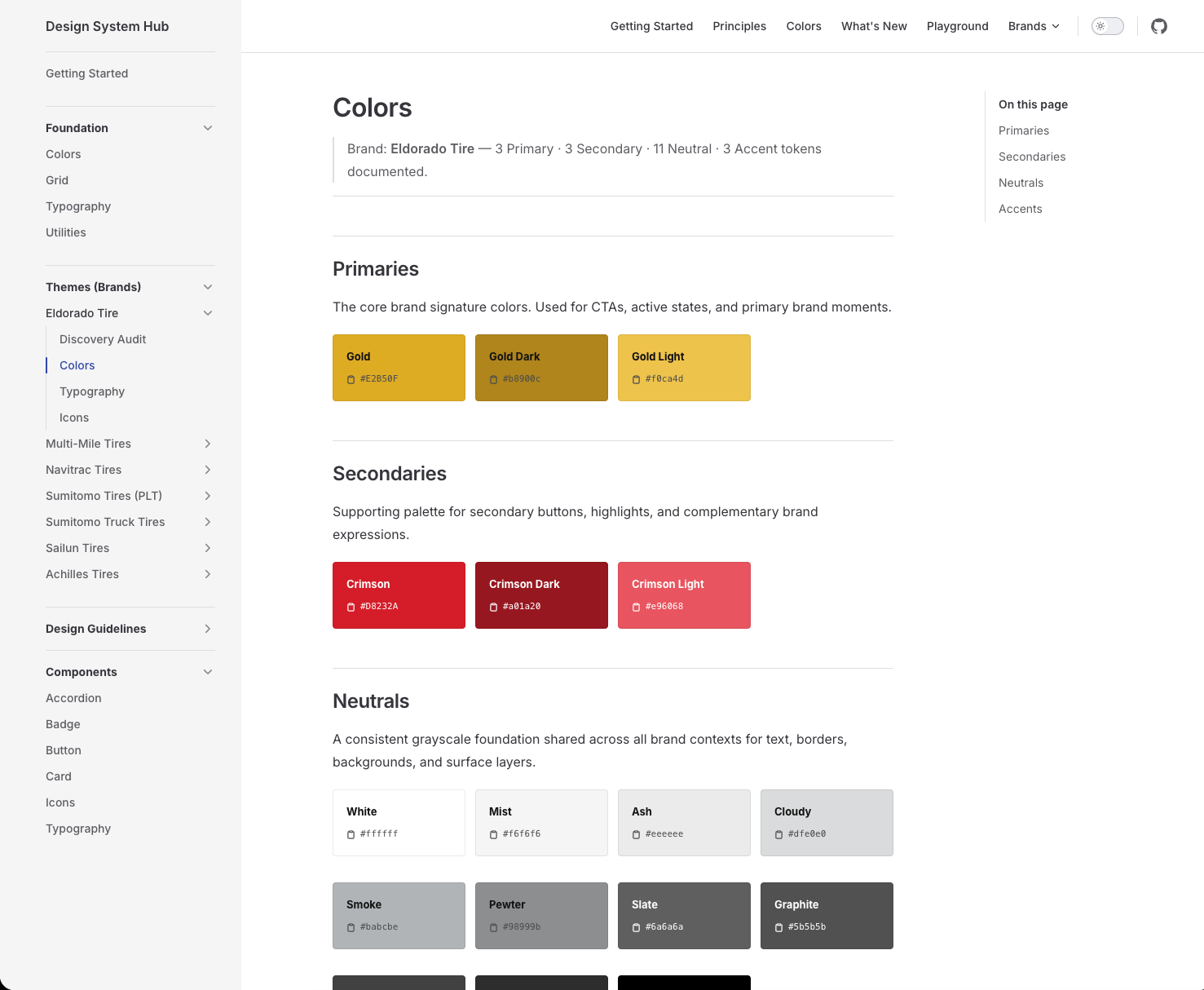
Machine-Readable Color Logic
Standardizing color tokens into machine-readable JSON for cross-platform injection.
Schema Governance
Standardizing primitive values into machine-readable JSON schemas. This allows for theme-agnostic styling and rapid injection of new brand identities into the shared component library.
Technical Implementation
AUTOMATED SYNC PIPELINE.
In an ecosystem of 2,000+ service locations, the design system is infrastructure. I established a W3C compliant token architecture that orchestrates parity across brand-specific systems - leveraging JSON-based tokens to ensure Figma variables and production code remain in perfect sync.
The Strategic Blueprint
By building an automated token infrastructure, I removed the manual handoff friction that typically stalls large-scale re-platforms. This shift decreased CSS handoff latency by an estimated 45%, empowering the team to spend their energy on solving customer problems rather than managing style documentation.
Strategic Evolution
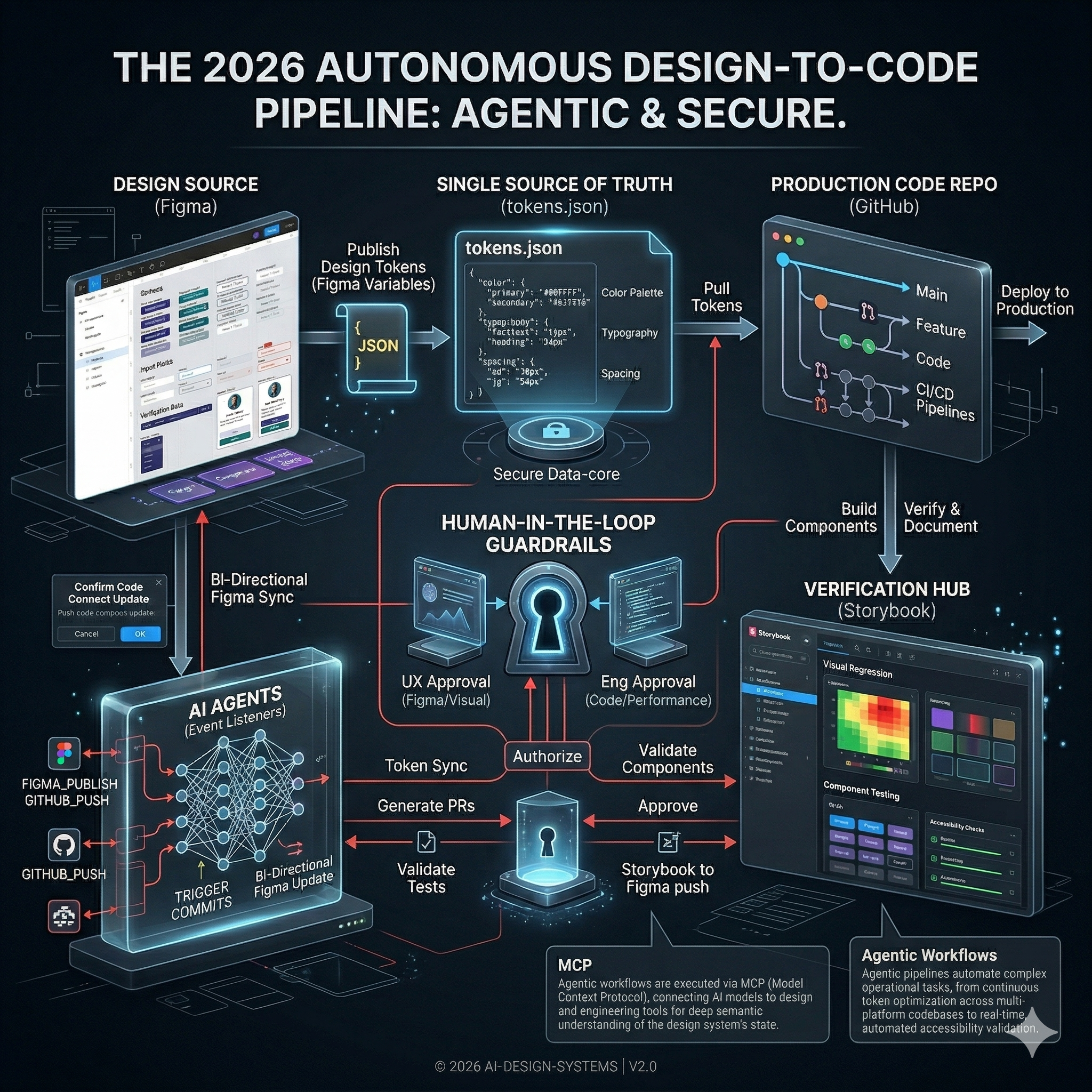
Multi-Year System Evolution
Tracking the growth from a tactical library to a strategic product infrastructure asset.
Systemic Evolution - Figma Architecture to Autonomous Pipeline
01. W3C tokens.json
Using tokens.json (W3C DTCG) as a machine-readable source of truth decouples design decisions from the tool. This eliminates documentation lag and ensures the Anatomy of every component is driven by platform-agnostic data.
02. Bi-Directional Bridging
Designed to achieve 1:1 parity through a live architectural link between design and code. By leveraging Figma Code Connect, production-level optimizations can automatically update the design library, ensuring the UI remains a perfect, real-time mirror of the live codebase.
03. Real-Time Parity
Engineered for continuous integration where GitHub Actions monitor Figma token updates. This triggers automated CSS builds, accessibility audits, and visual regression tests, ensuring the design system never drifts from production reality.
04. Engineering Governance
Designed to manage system integrity via a Storybook Verification Hub. The architecture enables automated PRs to be vetted for technical health and visual fidelity before triggering a back-sync to designers.
05. HUMAN GUARDRAILS
While automation drives delivery speed, humans provide the strategic intent. This "human-in-the-loop" model ensures automated proposals are vetted for brand nuance, empathy, and long-term product vision before they reach production.
| Strategic Vector | 2023 Legacy Model | 2026 Automated Pipeline |
|---|---|---|
| Paradigm | Reactive & Manual | Proactive & Autonomous |
| Source of Truth | Figma-Native Styles | W3C tokens.json (Data-First) |
| Sync Direction | Unidirectional (Push) | Bi-Directional (Figma Bridge) |
| Governance | Human Bottlenecks | Automated Guardrails |
| Validation | Manual Redlining | Verification Hub (Storybook) |
Systemic Stewardship
GOVERNANCE AS
INFRASTRUCTURE.
The true measure of a design system isn't the beauty of its components, but the longevity of its governance. By moving from manual handoffs to an automated, token-driven pipeline, I transformed the design system from a static library into a Strategic Product Asset.
This architecture ensured that as the organization scaled to 2,000+ locations, the brand remained sovereign, the code remained stable, and the speed to market remained uncompromised.
Continue Exploring